(Photo by HONG SON)
Sunday, 8 February 2026
FIFTH SUNDAY IN ORDINARY TIME – YEAR A
Commentary on the Sunday Gospel
Mt 5:13-16
We continue our journey in the footsteps of Sunday’s Gospel, which since last week has been presenting us with the Sermon on the Mount. Today’s verses follow on from the famous Beatitudes, and in some ways can only be understood in the context of the initial discourse. Indeed, they help us to better understand the last Beatitude presented by Jesus, the one addressed explicitly to his disciples, to our beloved Church. It is perhaps the most dramatic Beatitude, because it still challenges us today to question the meaning of our journey behind Christ.
Jesus offers two very clear images: salt and light. As in the case of the eight beatitudes, here too Jesus’ self-portrait continues. He is first and foremost salt, giving flavour to our lives, and he is also light, illuminating the darkness of our hearts. The beatitude of the disciple is to live out what Jesus first lived out, in the same way that his being ‘salt’ and ‘light’ only makes sense in adherence to and imitation of Christ. Salt and light, two very beautiful images taken from creation, encourage us to contemplate what is most familiar to us around us and to draw inspiration for a true conversion of the heart.
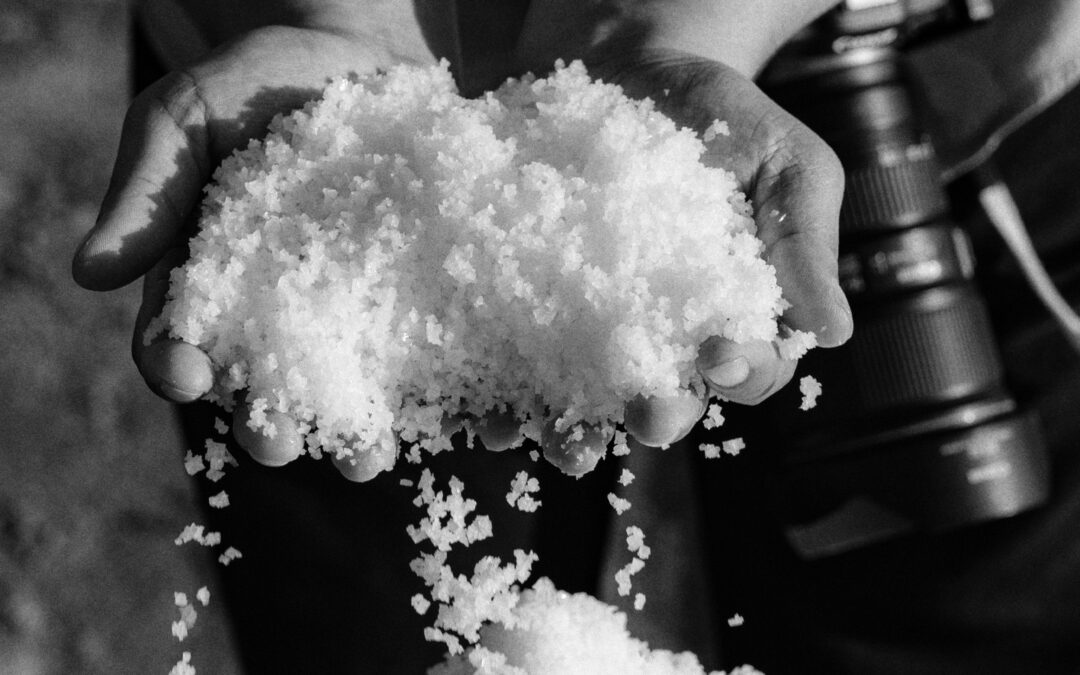
‘You are the salt of the earth’; each of us is the salt of the earth when we sincerely draw close to Jesus. We can have ‘the flavour of God’. This is because he, above all, has the flavour of God; he brings its fragrance and taste to earth. How beautiful that he chooses an image taken from the kitchen, a reference to our homes, to our mothers and grandmothers who wisely measure out the salt.
Salt has only one purpose, to give flavour, otherwise it is a tasteless piece of stone. So the purpose of the disciple is to bring flavour, not to diminish closeness to God, but rather to bring it to others, to share it. “With what will you make it salty?” the master then asks us. Only God makes a piece of stone salty, a mineral destined to be crushed and to flavour what nourishes us.
The central role of God is reiterated in the same way in the second image: ‘You are the light of the world‘. Both salt and light have their mission in the world, in our mother earth. And even light can only come from one source, only from God, and we have the task of welcoming it and spreading it. As does brother sun, who illuminates us through the light of God, as Francis says in the Canticle, “and illuminates us through him” (and illuminates us through him, through the sun).
Salt and light are not self-referential, but only make sense in relation to each other. No one eats salt on its own, but it is always used to season other foods, and its absence or excessive use is noticeable! But on its own, salt does nothing. Light, too, does not create reality, it does not change it, but only allows us to see it better; light also enters into a relationship with what it illuminates.
The meaning of these two beautiful images of relationship is expressed at the end of the passage: “so that they may see your good works and give glory to your Father in heaven.” Being salt and light in this world that cries out through creation and the poor means living with concrete works that help our brothers and sisters to praise the Lord. In this way, we can truly bring the earth closer to heaven.
On this Sunday, may the Lord give us the gift of being salt and light, doing God’s will, as St Francis of Assisi suggests: “Thy will be done, as in heaven so on earth: that we may love thee with all our heart, always thinking of thee; with all our soul, always desiring thee; with all our mind, directing all our intentions to thee and seeking thy honour in everything; and with all our strength, spending all our energy and sensitivity of soul and body in the service of thy love and nothing else; and so that we may love our neighbours as ourselves, drawing everyone with all our power to your love, enjoying the goods of others as our own and suffering their evils together with them, and causing no offence to anyone.” (FF 270).
We wish you a happy Sunday
Laudato si’!
I agree with you, Antonio. Only God can make a piece of rock salty, a mineral destined to be crushed and used to flavor what nourishes us. Let us place ourselves in the hands of God, who gives us flavor.
Merci Antonio, c’est formidable de réfléchir au sens de notre condition humaine. Tout repose sur les relations, sans relations, il n’y a rien. Même le sel et la lumière nous rappellent que tout est relation.
It is important to forge new relationships, not hide away, open our hearts and souls to receive a kind word, a hug that lifts us up in dark times.
Laudato Si’ 🙏
Thank you for this beautiful reflection. In a world that often feels divided and wounded, the Word of God reminds us that creation and humanity are deeply connected. When we listen to the Gospel with open hearts, we rediscover our responsibility to care for our common home and for one another. The present situation of our world — marked by conflict, environmental crisis, and social injustice — calls us not to fear, but to conversion of heart. May we become instruments of peace, justice, and ecological responsibility in our communities. Greetings and prayers from Pakistan.
” *_You are the light of the world_* ” — Mt 5:13-16
Lord, help us to shine through good intentions, good words, and good actions, to be in the world the reflection of your luminous presence.
¡Así es, querido Antonio! La sencillez, la discreción y la pequeñez hacen mucho bien, y ahí encuentras al Señor. Pequeños gestos como una sonrisa, una palabra o un gesto amable, un pensamiento, una bendición, cuidar una gota de agua, dar las gracias, esparcir una semilla en la tierra, etc. ¡Cuánto podemos hacer con un poco de buena voluntad! Cuán hermoso es el Señor.
Being salt and light in the world, reminds us of our responsibility and role in the world as Christians.
It’s imperative that we bear in mind that it’s our duty to inspire others to do great things and our lives also should be a source of great inspiration many .
May God give us to grace to discover who we are and work towards actualising our calling.